Thursday, January 27, 2022

The Last Breath

The Last Breath with Ajahn Pasanno

I brought this hand-size book back home from Temple Forest Monastery. The book embraces the final days of Jay until his last breath. Jay was convicted in 1983 for the robbery and the murders of 2 people. He admitted to involvement in the robbery but denied having committed the murders. Yet, he refused to name his accomplice and was convicted and sentenced to death. His last day was February 9, 1999.

"The story is of a person who was able to utilize the adverse circumstances of incarceration Death Row in San Quentin Prison and develop the inner resources to face his death with courage, grace and compassion."

Since birth, we all have been walking our lives towards death row similarly to what Jay faced except that our last day could not be easily determined by court or judge but our fate and mother nature. Jay really taught us how we could "live diligently" with mindfulness of death.

Overwhelmed with heavy heart and sympathy for Jay while reading the book, I also felt thankful to him and Ajahn Pasanno.  If next life as a human being was waiting for Jay, I prayed for him to be able to fulfil his life as he wished for which was staying on the path of Dhamma. Almost 23 years had passed, he might have been born again already. Who knows?

"Is there anybody you have not forgiven yet?" Jay thought about it. " I haven't forgiven myself completely," he said softly at last. 

The Last Breath » Amaravati Buddhist Monastery


Tuesday, January 4, 2022

Journey: Part 3 Sadnesses

We all have our own struggling, our own problems and of course our own lives. We should not judge the sadnesses of others because as long as we are not in his or her shoes, we will never ever understand them. 

During the last quarter of 2021, my heart was filled up with sadnesses. I did not realize that until the beginning of December. The never-ending divorce that had lasted for 4-5 years already, the new relationship that did not last, my daughter who never wanted to travel or go here and there with me for an unknown reason, and her health issues that had always been my concerns. I felt so lonely. One day, I talked over the phone with my close friend, and I started to cry and cry and talk and cry. Since that day, my tear kept coming down anytime those sadnesses surfaced in my thoughts. At the orientation with a monk, as soon as I started to talk to him, I cried right away.  

With no internet, no electronics, and no cell phone allowed at the monastery, I read "With Each & Every Breath, A Guide to Meditation" written by Thanissaro Bhikku (Geoffrey DeGraff). I was so blessed to find this book. The first night of meditation, 90% of the time my thoughts only wandered around between all those sadnesses. Thanissaro Bhikku says in the book, write down other thoughts in a paper and come back to deal with them after the meditation, or if those thoughts keep coming back during mediation, let it be, if they show up 100 times, let them go and bring my mind back to the breath 100 times. He gives suggestion on how to focus on the breath, how to observe breath energy going through our body parts and so on. There is no right or wrong in meditation, we just need to experiment with some guidance and eventually reach our own meditation path which also can be changed several times through the experiences. 

The Buddha - Dhamma
is not to be found in moving forward nor in the moving backward,
nor in standing still.
This is your place of non-abiding.
--Ajahn Chah

To me, meditation itself does not replace sadnesses. But meditation teaches me to be "non-abiding" which means, do not hold on to the past as it never returns, do not worry about the future, as it is unknown, just live with the present.  To live with the present, meditation teaches me to observe my breathing in and out. To be able to observe my breathing in and out, I have to be alert, be mindful, so that when my thoughts start to wander, then, I can bring myself back to observe my breath again.  I strongly believe, the more I practice meditation, naturally, the more sadnesses will be going away and replaced with a calmer and happier mind.

When you experience struggling in life, mid-life crisis, or sadnesses, in some situations, you might be able to do something or ask for cooperation from others, but in most situations, you cannot control the others, your partner, or the situations themselves, but you can work up your mind by doing meditation and gradually you will come out of those sadnesses, be happier and be more rational to deal with the issues with less emotional effects. 

 "With Each & Every Breath, A Guide to Meditation" written by Thanissaro Bhikku (Geoffrey DeGraff) -- Request for the book can be sent to Metta Forrest Monastery.
Metta Booklist (dhammatalks.org)

Or download eBook from: 
With Each & Every Breath: A Guide to Meditation (dhammatalks.org)


Sunday, January 2, 2022

Journey: Part 2 Life is just like this

At the monastery, I met couple new friends seeking a quiet and peaceful time to energize themselves before the new year.

"Why did you turn to Dhamma and meditation?" was a question being asked during an evening teatime,

JJ, the 60-year-old Chinese who joined me and Sirinat during our teatime openly talked about her story. Ten years ago, at the age of 50, menopause and maybe other things in life did have a lot of effects on JJ. She was trapped into depression and could not come out of it.  It was at the point when she could not work nor function in life at all. Eventually, she needed to be on anti-depression medicines. When trying to stop the medicines, she got relapsed twice. 

One day, she decided to sign up for a program offered at Insight Meditation Society in Massachusetts. She said the instructor talked Dhamma, sufferings and such and she knew that was it. What the instructor talked was what exactly happened to her. After the first program she attended, she started to participate more and more of this type of programs and retreats. Until today, she has been attending more than 1,000 hours of these programs. And the best of all, she no longer needs to use anti-depression medicine. 

Her 22-year-old son also has been struggling in school since the age of 14. Her son is still taking anti-depression medicines but has not yet sought advice from Dhamma and meditation. He is studying at a college right now and planning to stay in the college for another 2 more years. 

JJ did not talk about her husband much. She only said she and her husband did not have the same interest, so, they did not do things together much. 

It was not clear if JJ is still working or retired already. She said she volunteered at a hospital to teach Yoga and Meditation for people struggling in life. She said she experienced it before, so, she understood these people and she would like to help them. 

JJ seemed to read a lot. She seemed to understand Dhamma very well. She also traveled to Japan, sought a temple to stay and practice meditation there. She mentioned she would like to go to a place where she could shave and become a nun once in her lifetime.

Life is just like this indeed.

I came to the temple with lots of sadnesses. I did not share everything with JJ. Through her story, JJ did not know that she did help me as well. While she was struggling herself, her son was also struggling. Even now, I am certain she might still feel down from time to time, but I am glad she did find the refuge sheltering her from distress and sufferings. 

Life is just like this.  What about my life then?


Journey: Part 1 Peaceful New Year at Temple Forest Monastery

 It was an unplanned New Year holidays this winter, but the peaceful mind was the greatest present of all. 


"Yesterday is a memory
Tomorrow is the unknown
Now is the knowing"
--Ajahn Sumedho


The Temple Forest Monastery remained its simplicity, covered up with snow and very quiet in winter. The temple only allows limited overnight stay guests. There were about 4-5 male guests and 4-5 female guests while I was there. We were not allowed to use cell phone or electronics.

Everyone gathered in the chapel at 5:00 a.m. daily to meditate for an hour. 
After the morning meditation, we were assigned chores and after that, breakfast started at 7:00 a.m. to 8:00 a.m. Then, we did more morning chores and lunch started at 11:00 a.m. to noon. In the afternoon, we spent time by ourselves. I did sitting/walking meditation, reading Dhamma books, stretching exercise, etc. At 5:00 p.m. to 6:30 p.m. we could have tea, dark chocolate and cheese, but we were not allowed to eat anything else, in other word, we followed the monks' routine by not having any more meal after 11:00 a.m. Some guests used this time to do Dhamma talk, share their life experiences, why they started to meditate, etc. Then, at 7:00 p.m. we gathered in the chapel again for an hour meditation. That concluded our daily routine. I missed regular Saturdays and Sundays when monks offer Dhamma talk with guests. 

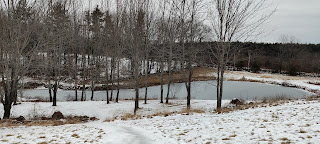
I enjoyed walking on the snow there. There is a creek running along the walking path and also there is an icy lake to walk over to on another path.  It was so quiet such that I had to also bring my cell phone along just in case if I really needed to use it.  I saw animal hoofs on the snow as well. 

This monastery is not a retreat center which normally have instructors to guide participants how to meditate, offer daily Dhamma talk, and participants meditate more longer hours daily.  Anyway, I did have a peaceful time there. 

I decided to leave a day sooner because on New Year Eve, the Abbot announced that there was another monk tested positive for Covid-19 and a young guy who had been helping around the temple did not feel well.  So, 2 of the 8 monks now were tested positive. The Abbot also canceled New Year Eve midnight chanting. I was not a close contact to the monks, but I did work and talk with that young guy daily. He did rapid test with negative result on the new year day. That gave everyone a relief, but we all still had to be cautious, so, I decided to come back a day sooner.

My peaceful time at the Temple Forest Monastery was from Monday December 27th, 2021, to Saturday January 1st, 2022.


Saturday, December 25, 2021

Art Project "Body Modification" Fall Semester 2021

Jasmine's Art Project "Body Modification" Fall Semester 2021

1. Septum


1. Patagial Tag


3. Smoking


4. Cherokee Wrist Tattoo


5. Tattooing


5. Back Brace


7. Maps of the Past


Life in the year 2021

 January

January passed like a lightening.  Jasmine turned 16th. She had extra ear pierces. She still did remote learning from home which had continued from March 2020. 

Covid-19 vaccines started to be administered to medical professionals, frontline respondents and essential workers.

Timeline of Covid-19 vaccines administered in US
https://en.wikipedia.org/wiki/COVID-19_vaccination_in_the_United_States

February
Jasmine had annual checkup which was skipped in 2020 due to Covid-19 pandemic.
Her spine X-Ray caused a concern and we were waiting for the next X-Ray in August.
I was still working from home.

March
Jasmine joined Fencing club, reunited with Kate (now Nate) and made new friends. She had minor oral surgery to remove what is called "Mucocele" 

April
By April 19, 2021, all U.S. states had made Americans aged 16 and older eligible for the vaccine.[15] 
Jasmine and I received the 1st Pfizer shot on April 7th and the 2nd shot on April 30th.
Interestingly, Walgreens mixed Sodium Chloride in the vaccine as well.  Due to my curiosity, I found this link that helps how to prepare Pfizer vaccine. Indeed 
0.9% sodium chloride (normal saline, preservative-free) was being used.
https://www.cdc.gov/vaccines/covid-19/info-by-product/pfizer/downloads/diluent-poster.pdf
Jasmine had her cavity filled and Dr. Akbar, her dentist recommended her to use night guard.

May
On May 4, 2021, Biden announced a new goal of having 70% of U.S. adults vaccinated by July 4, 2021.[14]
On May 10, 2021, the FDA approved the Pfizer vaccine for adolescents aged 12 to 15.[16]
This year Tax filing was extended from April 17th to May 17th. Jasmine received her night guard and started to use it. She should use it as it costed $536!  LoL. I worked in the yard removing the old rotten lumbers and once when bending down, I ended up hurting my lower back so bad. I thought I would not be able to walk any more or I might have slipped disc. Luckily it was not all that bad but from now on, I need to not overdo myself. My body was aging too! Well, my mind was still like in 20s. The doctor prescribed Diclofenac, an anti-inflammatory medicine.

Last day of school was May 26th. Jasmine hung out with Stephanie, her Korean close friend. 

Oh, and I started my garden with tomatoes, eggplants, watermelons, and lettuce. Two tomatoes started to show! 

June
United States vaccinations
https://www.npr.org/sections/health-shots/2021/01/28/960901166/how-is-the-covid-19-vaccination-campaign-going-in-your-state
At least one dose - 53%
Fully vaccinated - 45%

Georgia (rank 7th from the bottom. 😅)
At least one dose - 41%
Fully vaccinated - 34%

Jasmine kept learning how to drive. She started to get used to controlling my Mitsubishi Mirage G4 a little by little. 
My garden had 4 tomatoes! They were growing good. We had rainy days on and off.
Jasmine spent time with grandparents at the end of June.

July
Jasmine went to Vegas with her dad from July 13th - 21st. I was worried about Delta variant and was so glad she came back safe and sound. I went to see one of my close friends in North Carolina from July 22nd to 26th. Wow, the 
Hartsfield–Jackson Atlanta International Airport was packed! It took me 45 minutes at the security check point. I had a good deal $180 for this round trip ticket with free of charge for carry-on. And I also got a good deal for parking at Sonata Airport South hotel for just $28 total.  Seeing my friend and her family was also a blessing!  It was a great get-away time during this Covid-19 pandemic era. 

August
Jasmine started 11th grade. Even Cobb county declared state of emergency as Covid cases surged, Cobb county still did not order mask mandate. Starting week #3 after going back to school in person, on August 17th, Jasmine had cold like symptoms; fatigue, stuffy nose, cough and light headed. She stayed home for 3 days and had PCR test with negative result. 

On August 30th, the school sent an email to me saying "we learned of a student/teacher/staff member who tested positive for COVID-19" and "At this time, your child is NOT a close contact and does NOT need to quarantine".  Jasmine said still kids did not wear masks.  And we talked about what if some kids indeed got infected but no symptom and still went to school.  

In Georgia, 5,399,366 people or 50% of the state has received at least one dose.
Overall, 4,376,166 people or 41% of Georgia's population has been fully vaccinated.

Georgia cases went up again almost close to the peak last winter.

https://www.ajc.com/neighborhoods/cobb/cobb-county-declares-state-of-emergency-as-covid-cases-surge/G3CGT4BCZZBLFBMVLUTDYNPABE/
https://usafacts.org/visualizations/covid-vaccine-tracker-states/state/georgia

Oh, I almost forgot about Jasmine's spine x-ray. The result was slightly better but it was still close to surgery recommended level. The doctor asked for the next x-ray in May 2022.

September
Time flied so fast.  I could hardly remember what happened in September. Ah, right, Jasmine started to drive on the real road for the first time. She used to just practice within her school's parking lot. In September, she first drove through the back of our subdivision and continued on Wesley Chapel road and went into Mabry park. Couple days later, she drove back home from Nate's house and also from dad's house.

Pfizer booster shot was authorized by FDA and approved by CDC for at-risk groups.

October
Jasmine had PSAT test on October 13. I got a chance to watch Jasmine competed in Fencing tournament at Pope HS on Oct 16. It was my first time seeing her fence and it was so much fun. I taped her fist match of the day which she won 5-3. She looked cool! I love the fact that the results were up real time on fencingtimelive.com. 


The 2nd Fencing Tournament I went to see was at Pinecrest Academy on Oct 30, 2021.  We had to get up at 6:00 because women started first that day. Little bit sleepy but fun!

Moderna and Johnson & Johnson booster shot was authorized by FDA for at-risk groups.

Delta Plus variant started to spread in UK.

November
Time flies.  Today is Christmas day and I can hardly remember what happened in November. On November 16th, Jasmine and I had an appointment with Mrs. Johnson, Jasmine's counselor at Lassiter HS to go over college planning. Jasmine worked on Art projects for the theme "Body Modification". I took her to take pictures at a tattoo shop and at our neighbor's house. Around the end of November, the school called me saying Jasmine was identified as a close contact of a person tested positive for Covid-19.

December
Omicron variant first identified in November in South Africa, by now, had spread around the world. Jasmine and I had PCR test on December 7th and the result came back negative. I joined Woodbine Association Annual Meeting for the first time in years and I volunteered to be our subdivision Web Administrator. Jasmine finished her 11th Grade Fall semester with all A's. I am so proud and happy for her.

I am going to a retreat with Sirinat (Maew) between December 27th to January 2nd at Temple Forest Monastery. I am praying for our safe and smooth trip as Covid-19 cases are surging and the temperature is getting much colder in Temple, New Hampshire. As there will be no Wi-Fi, no phone signal there, I hope to really have time to self to withdraw from suffered mind and regain strength and mindfulness to move on with my better self in the year 2022.

One last thing, Covid-19 might not be forever going away from our lives, I just hope that in the year 2022, we will reach the point where we can be safely live with it. I wish for my wish to come true. Merry Christmas and Happy New Year to us all. 


Sunday, December 12, 2021

โฉมหน้าศักดินาไทย

โฉมหน้าศักดินาไทย ผลงานของ จิตร ภูมิศักดิ์

ได้ยินชื่อคุณจิตรมาตั้งแต่เรียนมหาวิทยาลัย (2531) แต่ไม่เคยอ่านงานเขียนคุณจิตเลย พอดีปี 2563 มีข่าวเรื่องตณะอักษรศาสตร์ จะไม่ลงแข่งวอลเล่ย์บอลกับคณะวิศวกรรมศาสตร์ ถ้าคณะวิศวะไม่ทำการขอโทษคุณจิตร อย่างเป็นทางการกรณีโยนบก เลยได้ไปค้นหาประวัติคุณจิตร และเหตุการณ์โยนบก แล้วเลยได้ชื่อหนังสือที่คุณจิตรเขียนมาหลายเล่ม แต่ที่เลือกอ่านเล่มนี้ เพราะเคยเป็นหนังสือต้องห้ามมาก่อน และต่อมาได้กลายเป็น 1 ใน หนังสือ 100 เล่ม ที่คนไทยควรอ่าน

11 ธันวาคม 2564
อ่านจบแล้ว สรุปสั้นๆ ก็คือ สมัยโบราณ ประเทศไทยปกครองด้วยระบบศักดินา ชนชั้นศักดินาออกกฎหมายเพื่อครอบครองผลประโยชน์ของปัจจัยแห่งการผลิต ซึ่งหมายถึงที่ดิน ทาสและไพร่ และออกกฎหมายเพื่อแสวงหาผลประโยชน์หรือขูดรีดจากปัจจัยแห่งการผลิตนั้น ทาสและไพร่ ไม่สามารถขัดขืนได้เลย เพราะการขัดขืนอาจหมายถึงความตายทั้งต่อตัวเองและครอบครัวได้

คำถามก็คือ คุณจิตรเขียนเรื่องนี้ราวปี 2500 ในช่วงที่ประเทศไทยยังมีกลิ่นอายของศักดินาอยู่มาก แต่ทำไม ปี 2564 กลิ่นนี้ยังคงตามมาหลอกหลอนสังคมไทยไม่จบไม่สิ้น

--- สื่งที่เราเรียกกันว่า “ศักดินา” ---

--"วิธีการอีกอย่างหนึ่งอันเป็นวิธีการขั้นสุดยอดของการรวบอำานาจก็คือริบโอนเอาที่ดินทั้งมวลมาเป็นของกษัตริย์ ยกเลิกพวกเจ้าขุนมูลนายชุดเก่า แล้วจัดตั้งพวกเจ้าขุนมูลนายชุดใหม่ขึ้น พวกที่ตั้งขึ้นชุดใหม่นี้โดยมากก็เลือกจากวงศ์วานว่านเครือเนื้อหน่อพงศ์เผ่าเหล่ากอศักดินาของพวกตนเอง หรือไม่ก็เลือกขึ้นจากข้าราชบริพารที่ทำางานดีสัตย์ซื่อต่อราชวงศ์ของตนเองแล้วส่งออกไปเป็นข้าหลวงดูแลหัวเมืองเอกโทตรีจัตวาต่างพระเนตรพระกรรณ พวกขุนนางชุดใหม่เหล่านี้ขึ้นตรงต่อกษัตริย์ทั้งสิ้น พวกนี้ในเมืองไทยเรียกกันว่า “เจ้าเมือง” หรือ “ผู้ว่าราชการเมือง” เมื่อกษัตริย์โปรดปรานเพราะรับใช้ได้คล่องและซื่อสัตย์กษัตริย์ก็จะมอบอำานาจให้เป็ นบำาเหน็จ อำานาจที่ได้รับก็คืออำานาจเหนือที่นา อาจจะให้เป็นจำนวนเท่าใดก็ได้ แต่ต้องไม่เกินอัตราที่กำาหนดไว้ในกฏหมาย นั่นคือสิ่งที่เราเรียกกันว่า “ศักดินา” โดยวิธีนี้ พวกเจ้าขุนมูลนายที่กินเมืองโดยการสืบสกุลจึงสลายตัวไป แต่ถึงอย่างไรก็ดี ผู้ที่ได้กินเมืองโดยการแต่งตั้งของกษัตริย์ก็ยังคงเป็นพวกวงศ์วานของเจ้าขุนมูลนายอยู่ดี เพราะมีเพียงพวกนี้เท่านั้นที่ได้รับการศึกษาอบรมและได้มีโอกาสได้เฝ้าแหนถวายตัว"

--ความสัมพันธ์ระหว่างคนในสังคมเป็นความสัมพันธ์ที่เหลื่อมล้ำต่ำสูงตามชนชั้นโดยกำาเนิด และตามอำานาจที่มีเหนือที่ดินระบบศักดินาเป็นระบบที่พัฒนาการสืบสันตติวงศ์ของระบบทาสให้ก้าวขึ้นมาอีกชั้นหนึ่ง การสืบสันตติวงศ์หรือสืบสกุลของพวกนายทาสได้กลายมาเป็นการสืบสันตติวงศ์และสืบสกุลของพวกชนชั้นเจ้าที่ดิน การนับถือยกย่องมนุษย์โดยชาติกำาเนิดได้พัฒนาขึ้นจนสูงสุดยอดในยุคนี้ พวกชนชั้นเจ้าที่ดินถูกยกย่อง หรือบังคับให้ประชาชนยกย่องขึ้นเป็ น “เทวดา” เป็น “เจ้าฟ้า” เป็น “พระเจ้า” เป็น“พระพุทธเจ้า” เป็น “โอรสสวรรค์” ฯลฯ

--เป็นต้นว่า “กษัตริย์องค์เดิมไม่ตั้งอยู่ในทศพิธราชธรรม ขอให้พวกเราจงช่วยกันสนับสนุนผู้มีบุญและมีทศพิธราชธรรมคนใหม่” หรืออะไรทำนองนี้ซึ่งก็ได้ผล เพราะทำาให้ชาวนาหันมาเข้าด้วยโดยหวังในชวี ิตใหม่ที่ดีกว่า นั่นก็คือชาวนายังยึดมั่นอยู่ในความสุขที่มาจากการประทานให้ของตัวบุคคล มิได้มองเห็นกำาลังของชนชั้นตน

--ขนบธรรมเนียมและประเพณีอันเกิดจากที่ดินนั้นถ้าจะได้รับการยกย่องเน้นให้เห็นเด่นชัดก็จะต้องเป็ นขนบประเพณีที่เป็ นประโยชน์ต่อศักดินาเท่านั้น เช่น เอ็งอาศัยแผ่นดินของข้าทำามาหากิน เอ็งต้องเป็นหนี้บุญคุณข้า ยิ่งพวกที่เป็ นทาสทำางานให้นายและกินข้าวของนายด้วยแล้ว พวกนี้ก็ต้องเป็นหนี้บุญคุณของข้าวแดงแกงร้อน

--จุดมุ่งหมายอีกประการหนึ่งในด้านการศึกษาของศักดินาก็คือกดคนลงไว้ให้โง่ ไม่ส่งเสริมให้ฉลาดทั้งนี้เพราะการกดขี่ขูดรีดคนฉลาดเป็ นสิ่งที่กระทำาได้ยาก การศึกษาในสมัยศักดินาจึงล้าหลัง แต่ในขณะเดียวกันศักดินาก็ต้องการคนฉลาดใช้คล่องไว้ปฏิบัติ “ราชการ” (คือธุรกิจของพระเจ้าแผ่นดิน) ศักดินาจะสร้างคนของเขาขึ้นมาไว้ใช้ โดยให้เข้ามาศึกษาในสำานักของผู้ดี สำานักของเจ้าขุนมูลนายและในราชสำานัก เด็กหญิงก็จะต้องรำ่าเรียนเพื่อเป็ น “ผ้าพับไว้” ไว้รอรับความหื่นกระหายของผัว พูดง่ายๆ ก็คือเรียนวิชาปรนนิบัติผัว เด็กชายก็รำ่าเรียนเพื่อให้เป็น “ขุนศึก” เป็น “อัศวิน” เป็น “ทหารเสือ”

--ฐานะของกษัตริย์ที่มีต่อที่ดินของแคว้นสุพรรณภูมินี้ไม่ปรากฏว่าเป็นไปในรูปใด แต่ภายหลังจากที่ได้อพยพย้ายครัวกันลงมาอยู่ ณ กรุงศรีอยุธยาแล้ว ฐานะของกษัตริย์ที่มีเหนือที่ดินก็ปรากฏให้เราศึกษาได้ชัด กล่าวคือ “เป็นเจ้าของผืนแผ่นดินทั้งมวลในอาณาจักร” ทั้งนี้เห็นได้จากคำปรารภของกฏหมายเบ็ดเสร็จส่วนที่ ๒ อันเป็ นกฏหมายที่ดิน ซึ่งพระเจ้าอู่ทองได้ตราขึ้น เมื่อ พ.ศ. ๑๙๐๓ หลังจากการสร้างกรุงศรีอยุธยาแล้ว ๑๐ ปี ตอนหนึ่งของคำาปรารภนั้นมีว่า:-“จึ่งพระเจ้าอยู่หัว มีพระราชโองการมานพระบัณฑูรสุรสีหนาท ดำารัสตรัสแก่เจ้าขุนหลวงสพฤๅแลมุขมนตรีทั้งหลายว่า ทใี่นแว่นแคว้นกรุงเทพพระมหานครศรีอยุธยามหาดิลกนพรัตนราชธานีบุรีรมย์ เป็นที่แห่งพระเจ้าอยู่หัว หากให้ราษฎรทั้งหลายผู้เป็นข้าแผ่นดินอยู่ จะได้เป็นที่ราษฎรหามิได้”

--ความเคลื่อนไหวสุดท้ายเจ้าที่ดินใหญ่แห่งอยุธยากระทำเพื่อเสริมสร้างความมั่นคงของระบบศักดินาก็คือ การออกกฏหมายศักดินาที่เรียกว่า “พระอัยการตำแหน่งนาทหารและพลเรือน” เมื่อปี พ.ศ. ๑๙๙๘ กฏหมายฉบับนี้แหละที่ได้เป็ นเครื่องมือสำาคัญในการรักษาสถาบันของชนชั้นศักดินาไทยให้ยืนยาวอยู่ได้จนกระทั่งถูกโค่นอำานาจทางการเมืองไปโดยการปฏิวัติของชนชั้นกลาง พ.ศ. ๒๔๗๕

--เมื่อเช่นนี้แล้ว กษัตริย์จึงได้ทรงพระกรุณาประทานที่ดินให้แก่พวกวงศ์วานว่านเครือของตนและข้าราชบริพารไปทำามาหากินอีกทอดหนึ่งส่วนแบ่งของที่ดินและอัตราจำากัดขนาดของที่ดินตามที่ปรากฏในพระอัยการนั้นมีดังนี้คือ

(๑) อัตราของพระบรมวงศานุวงศ์หรือวงศ์วานว่านเครือกษัตริย์รวมทั้งข้าราชการฝ่ายใน :

• สมเด็จพระอนุชาธิราชหรือสมเด็จพระเจ้าลูกเธอที่ได้เฉลิมพระราชมณเฑียรดำารงตำาแหน่งมหาอุปราชศักดินา ๑๐๐,๐๐๐ ไร่
• สมเด็จพระอนุชา (เจ้าฟ้ า) ที่ทรงกรมแล้ว
ศักดินา ๕๐,๐๐๐ ไร่
• สมเด็จพระเจ้าลูกเธอ (เจ้าฟ้ า) ที่ทรงกรมแล้ว
ศักดินา ๔๐,๐๐๐ ไร่
• สมเด็จพระอนุชา (เจ้าฟ้ า) ที่ยังมิได้ทรงกรม
ศักดินา ๒๐,๐๐๐ ไร่
• สมเด็จพระเจ้าลูกเธอ (เจ้าฟ้ า) ที่ยังมิได้ทรงกรม
ศักดินา ๑๕,๐๐๐ ไร่
• พระอนุชา (พระองค์เจ้า) ที่ทรงกรมแล้ว
ศักดินา ๑๕,๐๐๐ ไร่
• พระเจ้าลูกเธอ (พระองค์เจ้า) ที่ทรงกรมแล้ว
ศักดินา ๑๕,๐๐๐ ไร่
• สมเด็จพระเจ้าหลานเธอ ที่ทรงกรมแล้ว
ศักดินา ๑๕,๐๐๐ ไร่
• สมเด็จหลานเธอ ที่ทรงกรมแล้ว
ศักดินา ๑๑,๐๐๐ ไร่
• พระอนุชา (พระองค์เจ้า) ที่ยังมิได้ทรงกรม
ศักดินา ๗,๐๐๐ ไร่
• พระเจ้าลูกเธอ (พระองค์เจ้า) ที่ยังมิได้ทรงกรม
ศักดินา ๖,๐๐๐ ไร่
• พระเจ้าหลานเธอ ที่ยังมิได้ทรงกรม
ศักดินา ๔,๐๐๐ ไร่
• หม่อมเจ้า
ศักดินา ๒,๕๐๐ ไร่
• หม่อมราชวงศ์
ศักดินา ๕๐๐ ไร่
• สมเด็จพระเจ้าหลานเธอ ที่ยังมิได้ทรงกรม
ศักดินา ๔,๐๐๐ ไร่
• หม่อมเจ้า
ศักดินา ๒,๕๐๐ ไร่
• หม่อมราชวงศ์
ศักดินา ๕๐๐ ไร่

--การขูดรีดของชนชั้นศักดินา หรือการแสวงหาผลประโยชน์จากปัจจัยแห่งการผลิตการขูดรีดของชนชั้นศักดินาที่ต่อไพร่ทั้งมวลนั้น มีอยู่ด้วยกันหลายแบบหลายวิธีเป็นต้นว่า ภาษีอากรจากที่ดิน, ค่าเช่า, ดอกเบี้ย, และการผูกขาดภาษี

--แม้ในพระราชบัญญัติควบคุมค่าเช่านา พ.ศ. ๒๔๙๓ ซึ่งประกาศใช้เมื่อวันที่ ๑๒ ตุลาคม ๒๔๙๓ ก็ยังได้กำาหนดอัตราค่าเช่าไว้ดังนี้ :
(๑) นาที่ได้ข้าวเปลือกปี หนึ่งไร่ละ ๔๐ ถังขึ้นไป เก็บไม่เกินไร่ละ ๑๐ ถัง
(๒) นาที่ได้ข้าวเปลือกปี หนึ่งไร่ละ ๓๐ ถังขึ้นไป เก็บไม่เกินไร่ละ ๖ ถัง(๓) นาที่ได้ข้าวเปลือกปี หนึ่งไร่ละ ๒๐ ถังขึ้นไป เก็บไม่เกินไร่ละ ๓ ถัง
(๔) นาที่ได้ข้าวเปลือกปี หนึ่งไร่ละไม่ถึง ๒๐ ถัง เก็บไม่เกินไร่ละ ๑ ถัง

--ภาษีอากร
ผลประโยชน์ของชนชั้นศักดินาโดยเฉพาะพวกชนชั้นปกครองศักดินาในด้านภาษีอากรนี้ มีอยู่ด้วยกัน ๔ ประเภท กล่าวคือ :
๑) ส่วย
เงินหรือสิ่งของที่รัฐบาลศักดินาบังคับเก็บกินเปล่าเอาจากประชาชนและคนในบังคับของตน
๒) ฤชา
เงินค่าธรรมเนียมต่างๆ ที่เรียกเก็บเอาจากราษฎรในการต่างๆ ที่เกี่ยวข้องกับรัฐ เช่น ค่าธรรมเนียมในโรงศาล
๓) จังกอบ
คือการเก็บชักส่วนสินค้า เมื่อจะขนส่งเข้าออกหรือเมื่อทำาการขาย พูดง่ายๆ ก็คือภาษีสินค้า ผิดกับอากรตรงที่อากรเป็นภาษีเก็บจากผลิตผลที่ทำได้ จังกอบเก็บทั้งทางบกและทางน้ำ
๔) อากร
หมายถึงการเก็บชักส่วนผลประโยชน์ที่ราษฎรทำมาหาได้จากการทำางานด้านต่างๆ เช่น ทำนา, ทำไร่, ทำสวนนี่อย่างหนึ่ง หรืออีกอย่างหนึ่งมอบสิทธ์สิ ัมปทานให้แก่ประชาชนไปทำาการบางอย่างโดยเรียกเงินเป็นค่าอากรผูกขาด เช่น การเก็บของป่า, จับปลาในน้ำา (อากรค่าน้ำา), ต้มกลั่นสุรา, ตั้งบ่อนเบี้ย (การพนัน), ตั้งโรงโสเภณี ฯลฯ

--เงินแทนแรงหรือที่ยักกระสายเรียกกันว่า ค่าราชการหรือรัชชูปการนี้ ในรัชกาลหลังๆ ของกรุงรัตนโกสินทร์จำานวนลดลงเพราะลดราคาลงเหลือเพียง ๖ บาท แต่ก็ยังนับว่าเป็นรายได้รองลงมาจากอากรค่านา ใน พ.ศ. ๒๔๖๔ รัฐบาลศักดินาเก็บอากรค่านาได้กว่า ๗ ล้านบาท ขณะเดียวกันเงินรัชชูปการก็เก็บได้ถึง ๗,๗๔๙,๒๓๓ บาท ถ้าเราจะเทียบกับรายได้ทั้งสิ้นของรัฐบาลศักดินาใน พ.ศ. ๒๔๖๔ ซึ่งมีจำนวน ๘๕,๕๙๕,๘๔๒ บาท จะเห็นได้ว่าเงินรัชชูปการเป็ นรายได้ที่มากเกือบ ๙% ของรายได้ทั้งหมดของคณะกรรมการจัดการดูแลผลประโยชน์ของชนชั้นศักดินา ยิ่งในสมัยรัชกาลที่ ๔ ด้วยแล้ว รายได้ทั้งหมดของรัชกาลที่ ๔ ตามที่สังฆราชปั ลเลอกัวซ์จดไว้ว่ามีปี หนึ่งเฉลี่ยราว ๒๖,๙๖๔,๑๐๐ บาท ในจำนวนนี้เป็นเงินค่าแรงแทนเกณฑ์และค่าผูกปี้ เสียถึง ๑๔ ล้านบาท (โดยไม่นับส่วยอื่นๆ) คิดเป็นเปอร์เซ็นต์แล้วรายได้จากการเก็บเงินกินเปล่าตกราว ๕๖% ของรายได้ทั้งหมด!

--ต่อมาประชาชนทนการขูดรีดไม่ไหวก็หาทางเลี่ยงภาษีอากรโดยอ้างว่าที่ตรงนี้ตนเพิ่งเริ่มก่นสร้างได้ปี หนึ่งสองปี กฏหมายว่ายกอากรให้แก่ผู้เริ่มก่นสร้าง (“เบ็ดเสร็จ” ครั้งเริ่มสร้างสมัยกรุงศรีอยุธยา ) ข้าหลวงไปเก็บอากรค่านาที่ใดก็ต้องพบแต่ข้ออ้างเช่นนี้ ต้องถกเถียงกันเก็บอากรไม่ได้ กษัตริย์ต่อมาคือพระบรมราชาธิราชที่ ๒ จึงออกพระราชกำาหนดเมื่อปี พ.ศ. ๑๗๙๖ บังคับให้ผู้หักร้างนาใหม่มาแจ้งข้าหลวงเอาโฉนดบอกจำานวนที่ดิน และอากรไปถือไว้ ใครไม่มีโฉนดจะต้องข้อหาหลบหนีบดบังอากร มีโทษหนักกล่าวคือ :
“ท่านให้ลงโทษ ๖ สถาน ถ้าทรงพระกรุณาโปรดเกล้าฯ บ่ให้ฆ่าตีเสีย ให้เอาอากรซึ่งบังไว้แขวนคอประจานสามวันแล้วไหมจตุรคูณ (ปรับสี่เท่าเงินอากร)” (อาญาหลวงบท ๔๗) ที่ว่าให้ลงโทษ ๖ สถานนั้นมีต่างๆ กันคือ : ฟันคอ ริบเรือน, จำาใส่ตรุไว้ริบราชบาตรแล้วเอาตัวลงหญ้าช้าง (คือให้ตัดหญ้าให้ช้างหลวงกิน ซึ่งเป็นงานชั้นต่ำสุดเพราะถูกหญ้าบาด งูกัด เหม็นขี้เยี่ยวช้าง ฯลฯ), ทวนด้วยลวดหนัง ๕๐ ที, จำไว้เดือนหนึ่ง แล้วเอาตัวถอดลงเป็นไพร่, ไหมจตุรคูณ (ปรับสี่เท่า), และไหมทวีคูณ (ปรับสองเท่า) ใน ๖ สถานนี้ ในหลวงจะเลือกลงโทษสถานใดก็ได้ (อาญาหลวง ๒๗)

--ด้วยเหตุนี้ โทษฟันคอริบเรือนหรือริบราชบาตรจึงเป็นโทษที่นิยมใช้อยู่ทั่วไป เฉพาะในกฏหมายอาญาหลวงแล้วดูเหมือนเกือบจะทุกมาตราและในบางมาตราก็วางโทษเอาไว้น่าขำ เช่น “มาตราหนึ่ง ผู้ใดใจโลภนักมักทำใจโหญ่ใฝ่สูงให้เกินศักดิ์กระทำให้ล้นพ้นล้ำาเหลือบรรดาศักดิ์อันท่านให้แก่ตน แลมิจำพระราชนิยมพระเจ้าอยู่หัว (คือไม่ระวังว่าพระเจ้าอยู่หัวทรงชอบอย่างไหน) และถ้อยคำมิควรเจรจาเอามาเจรจาเข้าในระหว่างราชาศัพท์ (คือใช้คำราชาศัพท์ผิดเอาคำไพร่มาใช้ปน) แลสิ่งของมิควรประดับเอามาทำเป็นเครื่องประดับตน (ตีเสมอเจ้า!) ท่านว่าผู้นั้นทะนงองอาจ ท่านให้ลงโทษ ๘ สถาน สถานหนึ่งให้ฟันคอริบเรือน ๑ สถานหนึ่งให้เอามะพร้าวห้าวยัดปาก ๑ สถานหนึ่งให้ริบราชบาตร แล้วเอาตัวลงหญ้าช้าง ๑ สถานหนึ่งให้ไหม (ปรับ) จตุรคูณแล้วเอาตัวออกจากราชการ ๑ สถานหนึ่งให้ไหมทวีคูณ ๑ สถานหนึ่งให้ทวนด้วยลวดหนัง ๕๐ ที ๒๕ ที ใส่ตรุไว้ ๑ สถานหนึ่งให้จำไว้แล้วถอดเสียเป็นไพร่ ๑ สถานหนึ่งให้ภาคทัณฑ์ไว้ ๑ รวม ๘ ฯ” (อาญาหลวง พ.ศ. ๑๘๙๕, รัชกาลที่ ๑ ชำาระมาตรา ๑)

--ค่าธรรมเนียมที่มีพิสดารและมากมายเช่นนี้ เนื่องมาจากชนชั้นปกครองของศักดินาทั้งมวลในสมัยก่อนรัชกาลที่ ๕ ขึ้นไปมิได้มีเงินเดือน กษัตริย์เก็บภาษีอากรทั้งปวงเข้าพระคลังมหาสมบัติและแบ่งปันไปยังคลังของวังหน้าบ้าง ไปยังเจ้านายที่มีอิทธิพลมากๆ บ้าง แล้วก็เก็บเงียบ พวกข้าราชการทั้งหลายต้องออกหากินโดยเรียกค่าธรรมเนียมเอาจากประชาชน ไม่มีเงินเดือน ใครมีเล่ห์เหลี่ยมดี ล่อหลอกหรือใช้อำนาจบังคับเรียกค่าธรรมเนียมได้มากก็ได้ผลประโยชน์ใช้มาก ได้กินข้าวร้อนนอนสายมีเมียสาวหลายๆคน ซึ่งลักษณะการปล่อยให้ขุนนางเที่ยวเก็บค่าธรรมเนียมกินนี้ ได้กลายมาเป็นการทุจริตในหน้าที่ขึ้นอย่างมหาศาล แต่เป็นการทุจริตที่ประชาชนรู้ไม่เท่าทัน และที่ทุกคนก็ทำเหมือนกันหมดจนกลายเป็นของถูกกฏหมายไปในที่สุด และยิ่งไปกว่านั้น พวกขุนนางที่เข้ารับตำแหน่งต่างๆ ก็มักจะทำงานเร็วหรือช้า ดีหรือเลวโดยขึ้นอยู่กับช่องทางที่จะเรียกค่าธรรมเนียม ถ้าจะเรียกอย่างปัจจุบัน ก็คือค่าน้ำร้อนน้ำชา! เช่น ขุนนางในแผนกตุลาการ คือพวกลูกขุน ก็มักจะใช้อุบายถ่วงความไว้ร้อยสีร้อยอย่าง ถ้าไม่มีค่าธรรมเนียม เรื่องก็ไม่เดิน “อธิบดีผู้ซึ่งบังคับการในกระทรวงนั้นๆ เล่า ก็ไม่ใคร่มีใครเป็นธุระใส่ใจที่จะให้ถ้อยความในกรมเบาบางไป ด้วยไม่เป็นประโยชน์อันใดคุ้มค่าเหนื่อย สู้นั่งว่าภาษีอากรไม่ได้”๑๐๘ อีกอย่างหนึ่งกรมนี้มีผลประโยชน์น้อยกว่ากรมอื่นๆ “คนดีๆ จึงไม่ใคร่จะมี มีแต่คนที่หาผลประโยชน์อย่างอื่นไม่ได้แล้วจึงหันมาหาผลประโยชน์ในทางนี้”

--เมื่อชีวิตขึ้นอยู่กับน้ำาฝนก็ทำาให้เกิดมีประเพณีการแห่นางแมวขอฟ้าขอฝนขึ้นในหมู่พวกไพร่ที่ทำนาทั่วไป ทางฝ่ายกษัตริย์นั้นมีหน้าที่เพียงมาตรวจดูว่าไพร่ทำนาได้หรือไม่ ถ้าทำไม่ได้ก็เหมาเอาว่าขี้เกียจ ริบนาคืนไป การช่วยเหลือชาวนาของพวกศักดินาอย่างมากก็เพียงชักชวนให้ทำาพิธีขอฝน กษัตริย์จะแสดงพระมหากรุณาธิคุณโดยส่งพระพุทธรูปปางขอฝนเรียกว่าพระคันธาราษฏร์ ออกไปตามหัวเมืองต่างๆ สำาหรับนำออกมาทำพิธีขอฝน เรียกว่า พิธีพิรุณศาสตร์ ถ้าปีฝนแล้งทำานาไม่ได้ ก็มักจะโทษเอาว่าเป็นเพราะประชาชนไม่ทำพิธีพิรุณศาสตร์กันอย่างทั่วถึง พระเจ้าเลยไม่โปรด ไม่ใช่ความผิดของกษัตริย์ที่ไม่เอาใจใส่ทำาการทดน้ำ ขุดคลองทำชลประทาน ประชาชนเลยหลงไปฝากชีวิตไว้กับเทวดาฟ้าดิน เมื่อฝนไม่ตกก็เท่ากับฟ้าดินไม่โปรดเป็นเพราะวาสนาตัวไม่ดีเอง โทษใครไม่ได้!

--การขูดรีด หรือนัยหนึ่งการแสวงหาผลประโยชน์ของศักดินาโดยการยึดถือกรรมสิทธิ์ในปัจจัยการผลิตไว้แต่ผู้เดียวตามที่กล่าวมาแล้ว คือในด้านภาษีอากรทั้งมวลนี้ อาจมีความฉงนฉงายกันอยู่บ้างว่าในทุกรัฐ แม้ในรัฐสังคมนิยม ก็ย่อมมีภาษีอากรด้วยกันทั้งสิ้น ทำไมจึงจะมาระบุเอาว่าภาษีอากรของศักดินา เป็นการขูดรีด ความสงสัยข้อนี้อาจจะขจัดให้หายไปได้ โดยคำานึงถึงปัญหาขั้นพื้นฐานว่าใครเป็นผู้ถือกรรมสิทธ์ิในปัจจัยแห่งการผลิต ในระบบศักดินานี้ชนชั้นศักดินาเป็นผู้ถือกรรมสิทธ์ิในปั จจัยแห่งการผลิตกล่าวคือที่ดิน เมื่อได้ถือกรรมสิทธ์ิไว้แล้วก็มีอิทธิพลพอที่จะเสวยอำนาจทางการเมือง เรียกเก็บภาษีที่ดินเอาตามความพอใจ ภาษีที่ดินเป็ นหมวดภาษีใหญ่ที่รวมเอาภาษีค่านา, ภาษีสวน, ภาษีสมพัตสร, ภาษีนาเกลือ, ภาษีโรงเรือนร้าน (อากรตลาด) และภาษีเบ็ดเตล็ดอื่นๆ เข้าไว้ด้วยอีกมาก, ถัดจากภาษีที่ดินก็ได้แก่ส่วยหรือรัชชูปการซึ่งเป็นการเรียกเก็บกินเปล่าโดยชนช้นั ศักดินา นอกจากนั้น ก็จัดเป็นพวกภาษีเบ็ดเตล็ดเป็นต้นว่า ภาษีสุรา, อากรค่าน้ำ ฯลฯ เมื่อชนชั้นศักดินาเป็นผู้เก็บภาษีทั้งมวลเช่นนี้ เงินที่ได้ก็ย่อมตกไปเป็นสิ่งบำารุงบำาเรอชนชั้นศักดินา ปล่อยให้ประชาชนเสวยเคราะห์กรรมไปตามเพลง เมื่อเป็นเช่นนี้การเก็บภาษีอากรของศักดินาจึงเป็ นการขูดรีดอันมโหฬารอย่างสำาคัญ (โดยเฉพาะที่ดิน) ภาษีในสังคมทุนนิยมก็เป็นการขูดรีดของชนชั้นนายทุนเช่นกัน มีเพียงภาษีในสังคมระบบสังคมนิยมที่ประชาชนผู้ถือกรรมสิทธ์ในปัจจัยแห่งการผลิตร่วมกันเท่านั้นที่มิได้เป็นการขูดรีด ทั้งนี้เมื่อประชาชนถือกรรมสิทธ์ิในปัจจัยแห่งการผลิตร่วมกัน เขาย่อมถืออำานาจทางการเมืองร่วมกันด้วย และแน่นอนภาษีอากรต่างๆ ย่อมเป็นสิ่งที่บำารุงความสุขสบายและสภาพชีวิตอันสมบูรณ์ของพวกเขาทั้งมวล!...§